How to play coinche well
Updated
Playing coinche well isn't about a secret move: it's applying a few solid principles consistently. Lead, trumps, defence, signalling, the last trick: here is what sets a good player apart.
A good player has a plan from the lead
Before laying the first card, a good player counts: how many sure tricks, how many to build, who bid what. The lead is never random. Leading a trump pressures the declarer; leading into your partner's suit helps them; leading under an ace can cost it. The right choice depends on the contract and your seat.
Keep the numbers in mind: 162 points per deal, with the Jack of trumps (20) then the 9 (14) ruling the trump suit. Knowing where the big trumps sit guides the whole deal.
Managing trumps like a good player
Trumps are the master weapon. The declarer's reflex is often to draw trumps so aces and winners run without being ruffed. But it isn't automatic: with a short suit, keeping a trump to ruff scores more. A good player decides by their hand, not by habit.
- Draw trumps when you hold the winners and want to lock them in.
- Keep a trump to ruff when you're short in a suit.
- Count the trumps that fall to know when you're in control.
Defending actively
Playing well also means defending well, and defence often separates the levels. When an opponent has taken the contract, your goal isn't to "wait and see" but to set it: cash points, ruff their suits, deny them the last trick. A passive defender lets through contracts that active defence would have broken.
Also remember: don't ruff your partner's winner. If they hold the trick, save your trumps for something else.
Playing as a team: signalling and the last trick
Coinche is a partnership. Signalling (playing high to say "I like this suit," low to say the opposite) is your only language during the play. A good player both sends and reads these signals.
Finally, keep the last trick. The 10 points of the final trick flip a tight game. Holding a small winner or a last trump for the eighth trick marks a good player, and never forget to announce your belote (20 points) if you hold the King and Queen of trumps.
From principle to the table
These principles become reflexes by playing them. The most effective path is to practise on real situations and get corrected. On Coincheur, play for free against tunable AIs, with a coach and exercises to work on the lead, trumps, defence and the last trick one at a time.
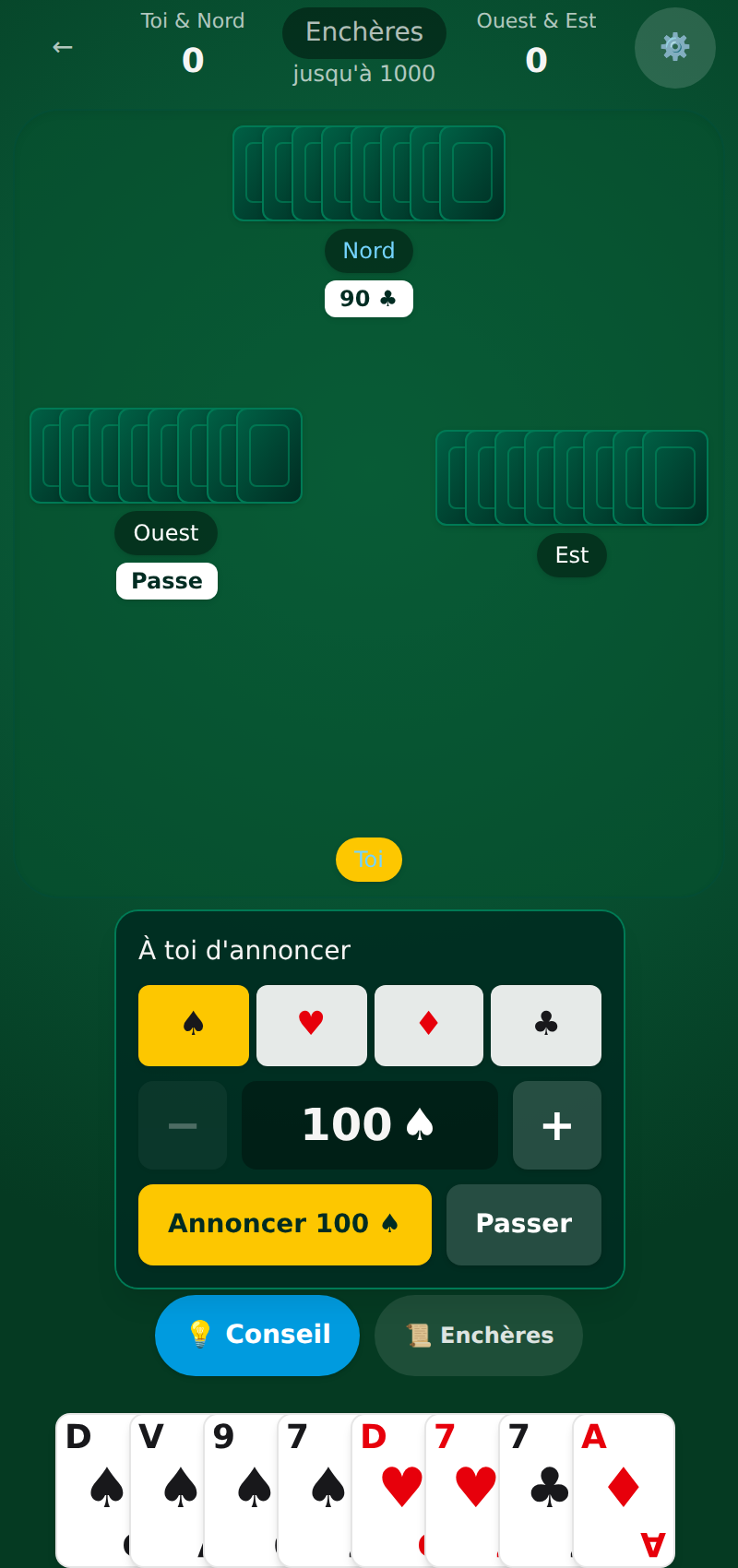 Want to practise? Play coinche online for free: tunable AIs and a coach are waiting for you on Coincheur.
See also
FAQ
What sets a good coinche player apart?
Consistency in the principles: a thoughtful lead, sound trump management, active defence and the reflex to keep the last trick. A good player has a plan from the first card and adapts it to what they observe.
Do you always have to draw trumps to play well?
No. Drawing trumps protects your winners, but keeping a trump to ruff a short suit sometimes scores more. Playing well means choosing by your hand, not applying an automatic rule.
Is defence as important as attack?
Often more so. Defence is where skill gaps show most: active defence sets contracts that passive defence lets through. Always play to break the opponent's contract.