Choosing your opening lead well
Updated
The opening lead is your first card of the trick: it shapes the whole deal. There's no single best lead, only choices suited to your hand.
Lead your master cards
With a supported side ace (ace plus other cards in the suit), leading it banks a sure trick and keeps the lead. It's a solid lead when you want quick points before the opponents can ruff.
Help your partner
If your partner bid a suit or took the contract, leading their suit is often best: you play toward their strength. On defence it's a classic way to let their points come in.
Cautious leads
- Small neutral card: you watch without giving anything away.
- Avoid leading away from a lone king or queen: you risk handing them over.
- Trump: useful to clear, risky if your trumps are weak.
Example: an opponent took 90 in spades, you're on lead
Your hand: A♥ 10♥ 8♥, K♣ 7♣, Q♦ 9♦ and 7♠. Let's go through the options:
- A♥: a sure trick worth at least 11 points, and your 10♥ becomes the highest heart left. It's the most natural lead.
- K♣: you hand your king to the opponents' ace if it sits behind you. Not very appealing.
- 7♠: your only trump. Leading it mostly helps declarer draw trumps.
After the A♥, think before leading the 10♥ again. There are 8 hearts and you hold 3. If the other three all followed on the first round, only 2 remain outside (8 - 3 - 3 = 2) for three players: at least one of them is now out of hearts. If that's declarer, your ten may get ruffed. Depending on what fell, leading the 10♥ right away or switching suits can both be sound.
Guidelines by situation
- You're defending: a supported side ace, the suit your partner bid, or a neutral card. Avoid leading away from a bare king or queen.
- Your partner took the contract: leading trump is a widespread habit, to help them clear the opponents' trumps. The suit they bid is also a good option.
- You took it yourself: your lead follows your plan, often trump if you're long and strong.
- In every case, your lead tells your partner something: choose it for that message too.
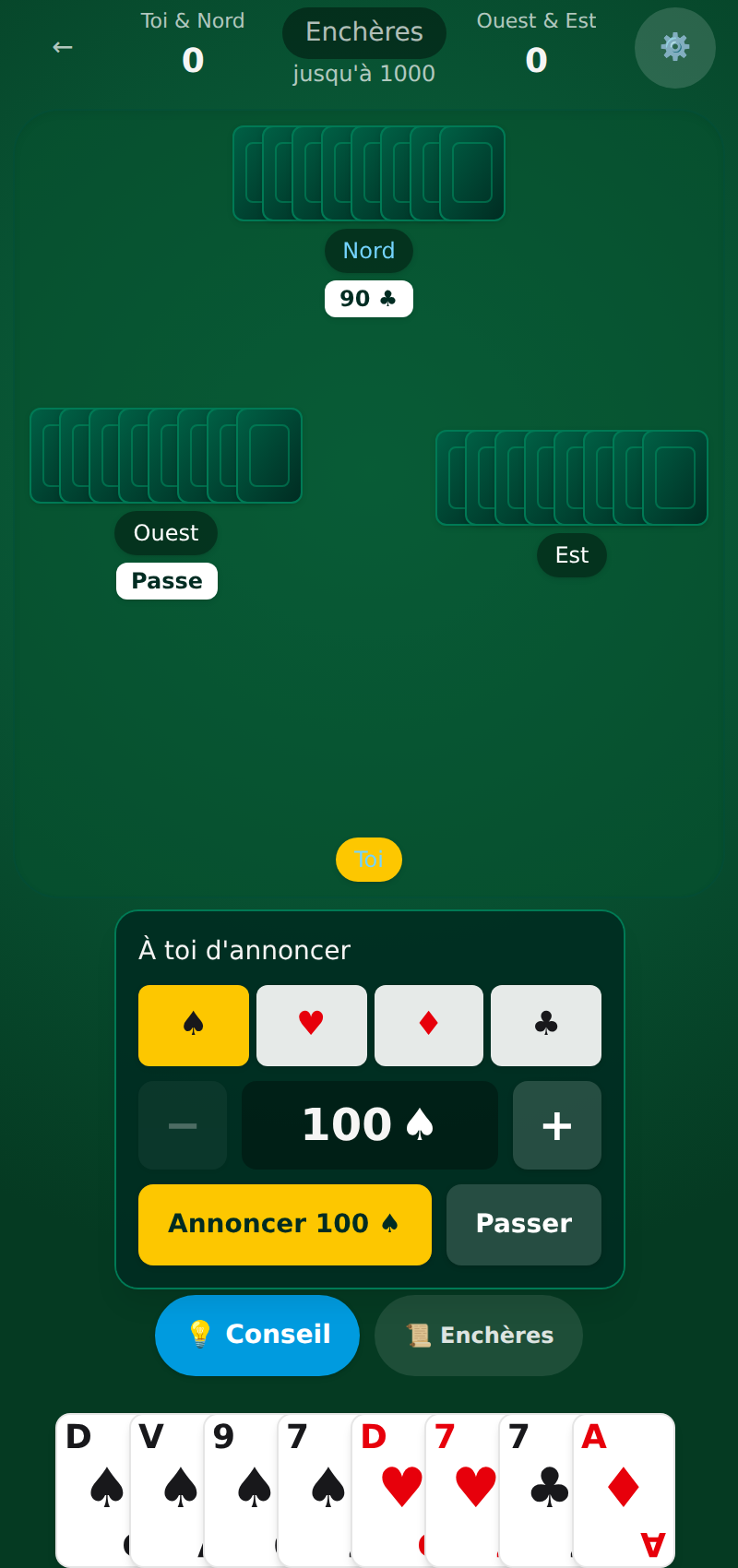 Want to practise? Play coinche online for free: tunable AIs and a coach are waiting for you on Coincheur.
See also
FAQ
What's the best opening lead in coinche?
There isn't a single one. Cashing a side ace, leading your partner's suit or playing a neutral card are all valid options depending on your hand and the contract.
Should you lead trump on defence?
Sometimes, to annoy declarer, but with weak trumps you often help them clear. Weigh your trump strength first.
Should you lead trump when your partner took the contract?
It's a widespread guideline: it helps them clear the opponents' trumps and protects their masters. But if you have a side ace to cash, or a single valuable high trump, other leads are defensible too.