Drawing the opponents' trumps: how far?
Updated
Drawing trumps protects your masters, but pulling them all, every time, is a common mistake. The right dose depends on your plan.
The goal: secure your side suits
Knocking out the opponents' trumps stops them from ruffing your aces and tens. With a long, strong side suit, clearing trumps first guarantees it will run.
When to stop
No need to pull one more trump if you're already master everywhere. Each pointless trump round costs you a card and a tempo. Count: if one opponent trump remains but it's smaller than yours, leave it, it will fall on its own.
When not to draw at all
- You need your trumps to ruff a short suit.
- You're after the last trick: keep a master trump for it.
- On defence: drawing trumps usually helps declarer, not you.
Example: you took 110 in clubs with 5 trumps
Your hand: J♣ 9♣ 10♣ K♣ 7♣, A♦ 10♦ and A♠. Three trumps are missing: the ace, the queen and the 8. Reason it through step by step:
- Round 1, the jack. If the other three all follow, 4 trumps are gone and you hold 4: 8 - 4 - 4 = 0. You're done. One more round would mean leading trump against nobody, and you'd lose a trump that could be useful late in the deal.
- If one player discards, only one trump remains outside (8 - 3 - 4 = 1). Look at which ones fell: if the ace is gone, the last one is the queen or the 8, lower than your ten and king.
- You can then lead the nine to pull it, or leave it if you'd rather keep your trumps for the end. Just remember that a trump left outside can still ruff one of your side suits.
The common mistake: drawing your partner's trumps
When one or two trumps remain outside, they may well be in your partner's hand, not the opponents'. If your partner supported your suit in the bidding, it's even likely. Pulling one more round then forces them to throw away trumps that could have ruffed or won a trick. Before each round, ask yourself: "what do I gain if the missing trump is with an opponent, and what do I lose if it's with my partner?" There's no single answer, but simply asking the question saves a lot of pointless rounds.
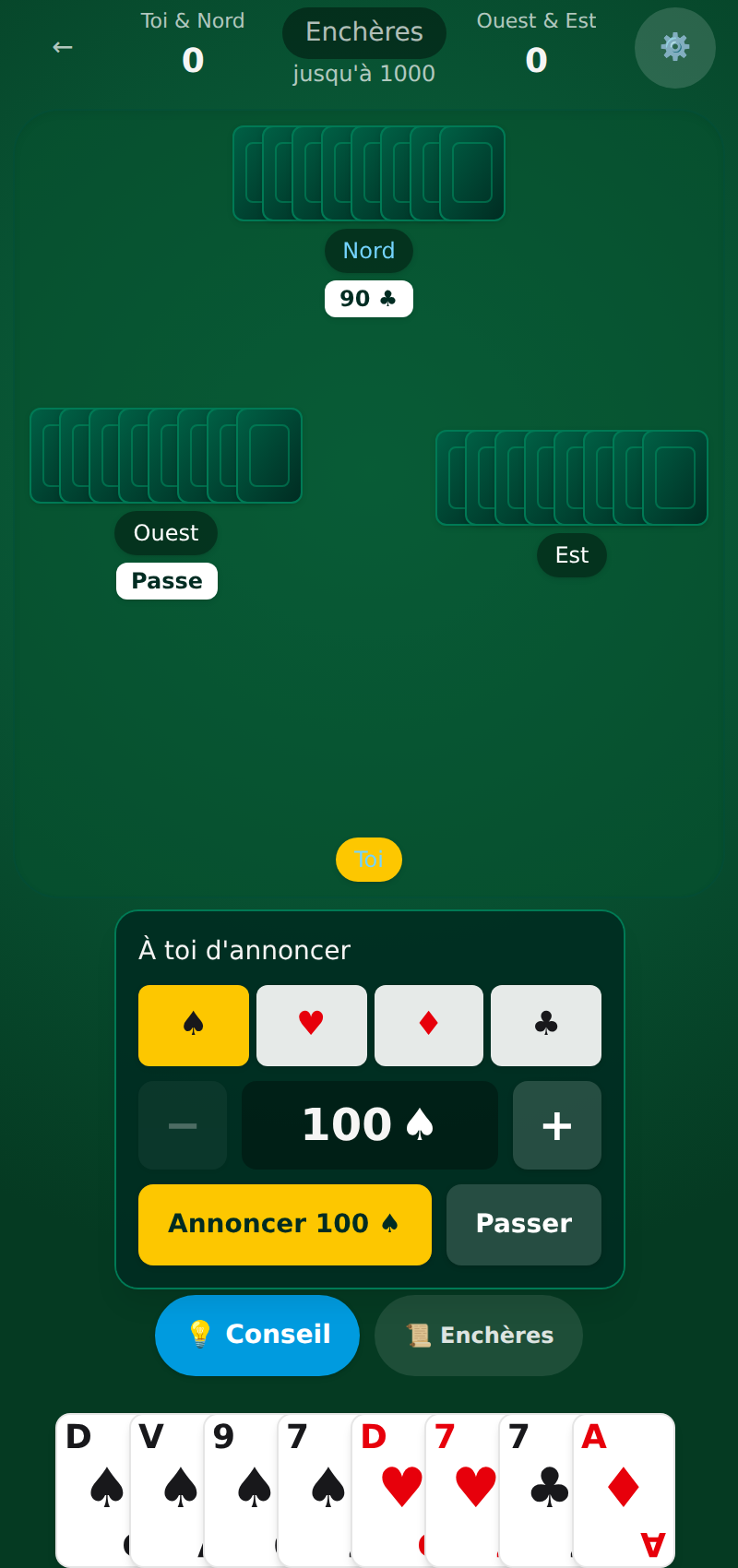 Want to practise? Play coinche online for free: tunable AIs and a coach are waiting for you on Coincheur.
See also
FAQ
Should you always draw all the trumps?
No. You draw trumps to protect your masters, but stop once you're master everywhere or when you need trumps to ruff.
How do you know if trumps remain?
By counting the ones already played. With 8 trumps in play, follow the rounds: when the count adds up, you know whether an opponent still holds one.
Should you draw the opponents' last trump if it's the master?
You can't pull it without giving them a trick. Often you leave it: it will win a trick anyway, and you'd rather it ruff a small card than one of your aces. Leading trump to flush it out makes sense when you have many side masters to protect.