Position: the edge of playing last
Updated
In coinche, the order you play in changes everything. Playing last to a trick is an edge: you decide already knowing the others' cards.
The last player sees all
When you play the 4th card of the trick, you know exactly who's winning and how many points are at stake. You can then play the minimum to take it, or let a worthless trick go. It's the best seat for deciding.
The first player is in the dark
Conversely, leading the trick means playing blind: you give information without receiving any. Hence the importance of choosing your lead carefully and not revealing your points for nothing.
Play to your seat
- In 2nd seat (right after the leader), often play low: two players still come after you.
- In 3rd seat, play high to back your partner if an opponent leads.
- In 4th, take as cheaply as you can or discard depending on points.
Example: the same hand in three seats
Spades are trumps. You hold A♥ Q♥ 7♥, and a heart trick is being played.
- In 2nd seat, an opponent leads the 8♥. You play the 7♥: your partner can still win, and your ace stays the master for a richer trick. Playing the ace right away would only collect an almost empty trick.
- In 3rd seat, your partner leads the 10♥ and the opponent plays the king. The ten beats the king, and the only higher card, the ace, is in your hand: don't overtake. Play the 7, or the queen if the trick looks safe.
- In 4th seat, the opponent led the 10♥, your partner played the 8♥, the other opponent the king. Your ace takes 10 + 0 + 4 + 11 = 25 points, with no risk at all since you play last.
Exceptions to "second hand low"
Playing low in 2nd seat is a guideline, not a law. If an opponent leads the 10♥ and you hold the ace, take it: only the ace beats the ten, and your partner can only beat it by ruffing. Letting it pass hands over 10 points. Likewise, if you hold the master and the trick already contains points, taking it right away is defensible. And if an opponent behind you might ruff, cashing now can be safer than waiting.
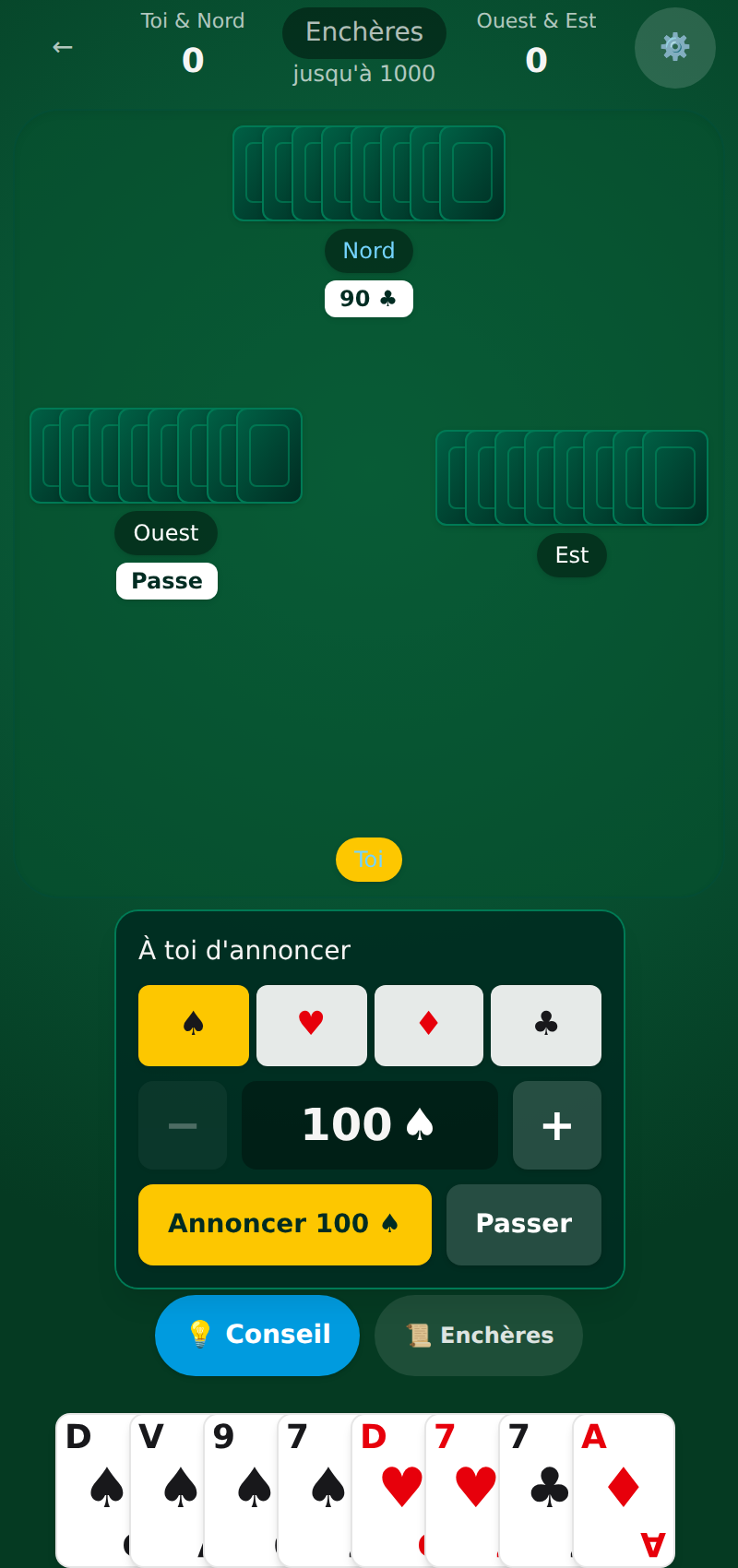 Want to practise? Play coinche online for free: tunable AIs and a coach are waiting for you on Coincheur.
See also
FAQ
Why is playing last an advantage in coinche?
Because you see the three cards already played: you know who's winning and how many points are at stake, so you decide with full information.
What should you do in second seat?
Often play low, since two players still come after you. You avoid wasting a high card before knowing what your partner and the opponent will do.
Should you always play low in second seat?
No. It's a good guideline when the trick is worth little, but if the opponent leads a ten and you hold the ace, or you hold the master on a rich trick, winning right away is often better.