Letting your partner take the lead
Updated
You don't have to win every trick you could: sometimes playing low to let your partner take the lead earns the team more.
Why duck on purpose
If your partner is better placed to run a long suit or ruff, handing them the lead wins. You play a small card under their trick instead of overtaking pointlessly: they keep the entry and the initiative.
Place your points under their trick
When your partner already wins, slip your points underneath: a ten (10 pts) or an ace (11 pts) on their winning trick joins the team's total at no risk. It's one of the most profitable reflexes in both defence and attack.
Without overdoing it
- Don't duck if the opponent behind you can win the trick.
- Make sure your partner truly has the entry.
- On a contested high-point trick, take it rather than gamble.
Example: your partner took 100 in diamonds
Your partner has already pulled all the opponents' trumps. They lead the A♠, the next opponent follows with the 8♠, and it's your turn with 10♠ 7♠.
- Your partner's ace is the master, and no opponent has a trump left: the trick is safe, even if the last player is out of spades.
- So you slip in the 10♠: the trick is worth at least 11 + 0 + 10 = 21 points for your side, plus the last player's card.
- If opponent trumps were still outside, the math would change: the last opponent could ruff and collect your ten. The 7♠ would then be the safer card.
The common mistake: overtaking your partner
Overtaking means winning a trick your partner was already winning. The typical case: your partner plays the A♠, the master, and you have no spades. Since they're winning, you're not forced to ruff. Ruffing anyway spends a trump on a trick your side already had. Another case: your partner plays the K♦ while the ace and ten of diamonds are gone. Their king is the master: your queen doesn't beat it, it simply adds 3 points to the trick. Guidelines:
- In a side suit, you only have to follow, not beat the card: use that freedom.
- If it's your only card in the suit, you have no choice, and it's not a mistake.
- Keep your big cards for tricks your side isn't winning yet.
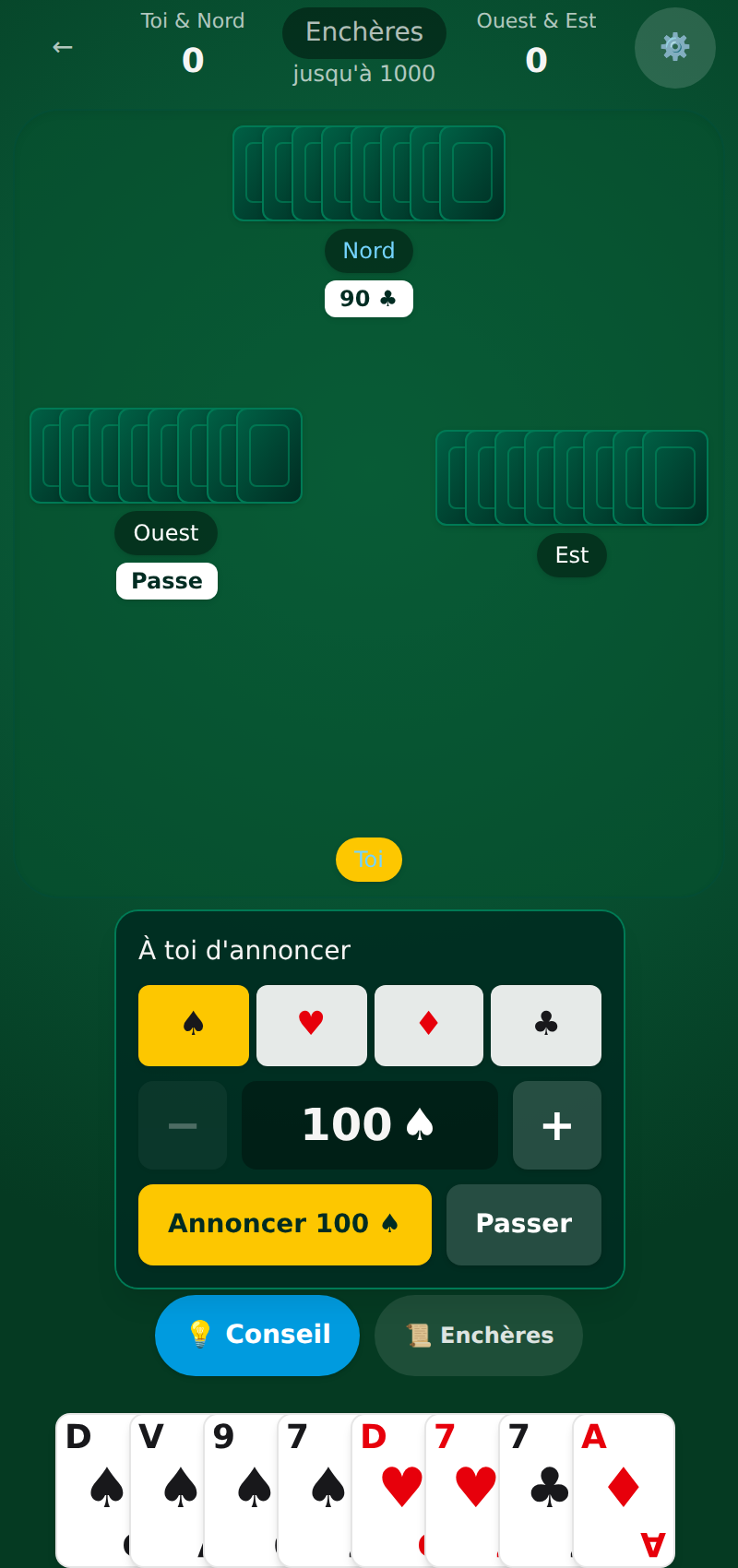 Want to practise? Play coinche online for free: tunable AIs and a coach are waiting for you on Coincheur.
See also
FAQ
Why play low in coinche?
To let your partner take the lead when they're better placed to run a suit or ruff, or to slip your points under their winning trick at no risk.
When should you put points under your partner's trick?
When they already win the trick and no opponent behind you can take it. A ten or ace then joins the team's total.
Do you have to beat your partner's card?
In a non-trump suit, no: you only have to follow. In trumps, the most common rule forces you to go higher if you can, even when your partner is winning. Check your table's rules.