Dealer, first player and direction of play
Updated
In coinche, play traditionally goes counter-clockwise, and the dealer role changes every deal.
Who deals
The dealer changes each deal: after one deal, the next player in the direction of play, so the one to the previous dealer's right, deals. Over a game, everyone deals in turn. The very first dealer is usually drawn at random.
Who bids and leads
In the auction, the player seated just after the dealer in the direction of play, so to the dealer's right, speaks first, then it goes around. For play, that same player, to the dealer's right, traditionally leads the first trick. The winner of each trick leads the next one.
The direction of play
Play runs counter-clockwise in the French tradition: dealing, bidding and card play all move to the right. Some tables play the other way round: agree on it before the game (it's a setting in Coincheur). Partners sit opposite each other: you always play with the person across from you, against the two players on your sides. Keep a constant direction all game to avoid mistakes.
Example: four deals in a row
Seat the players like compass points: North and South are partners, so are East and West. Play goes counter-clockwise, so after South comes East (on South's right), then North, then West.
| Deal | Dealer | First to bid and to lead |
|---|---|---|
| 1 | South | East |
| 2 | East | North |
| 3 | North | West |
| 4 | West | South |
After four deals, everyone has dealt once and everyone has bid first once. The dealer always speaks last in the first round of bidding, which gives them the edge of having heard everybody. For the dealing itself (packets of 3, 2 then 3 cards), see how to deal the cards.
Common mistake: letting declarer lead
Many beginners assume that whoever won the auction plays the first card. Under the most widespread rule, that's not the case: the opening lead belongs to the player sitting just after the dealer (to their right), whoever the declarer is. Declarer may well play second, third or fourth to the first trick.
Another point that sparks arguments: when everyone passes and the cards are redealt, who deals? It depends on the table, as covered in when all players pass. The easiest fix is to settle these small rules before the first deal.
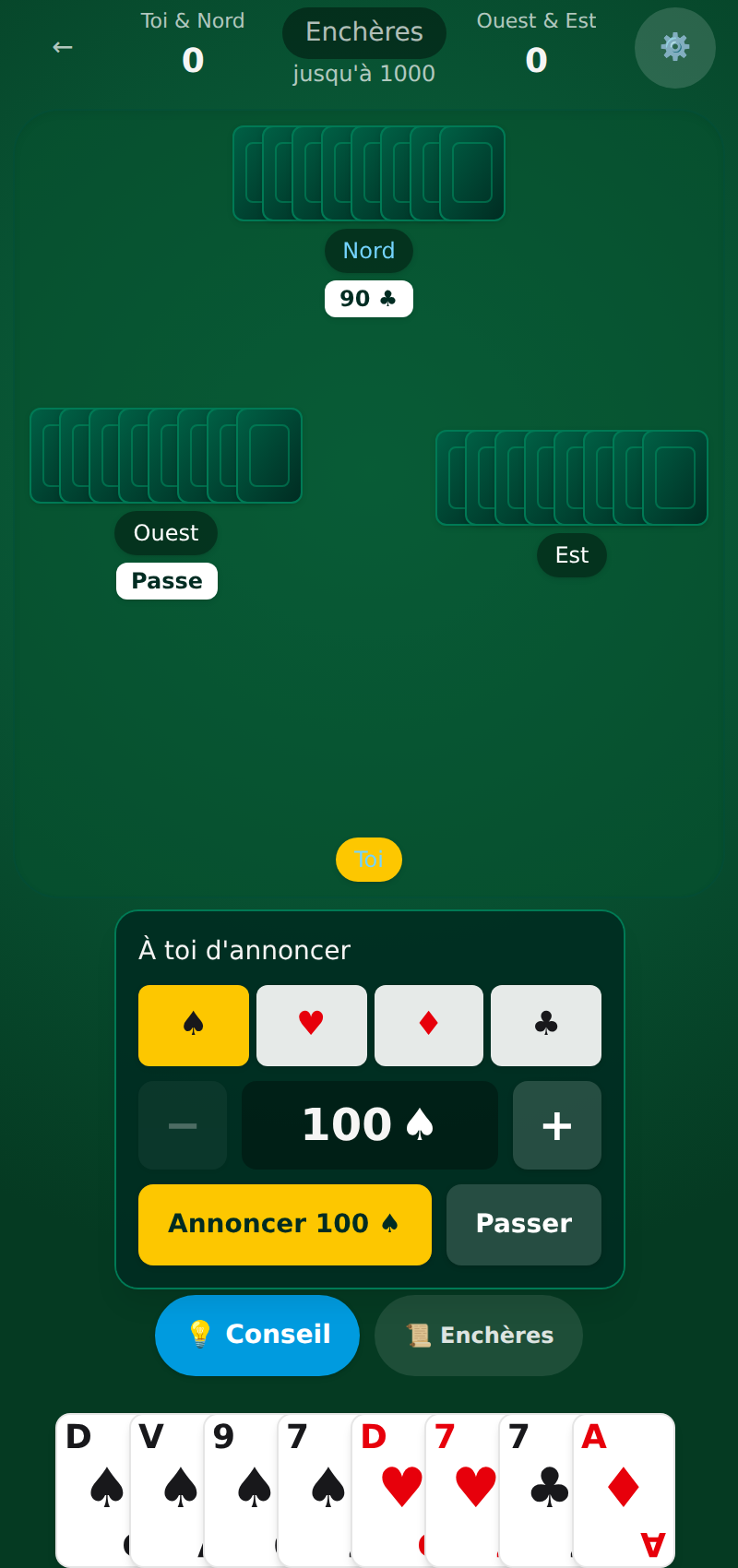 Want to practise? Play coinche online for free: tunable AIs and a coach are waiting for you on Coincheur.
See also
FAQ
Who deals in coinche?
The dealer role rotates each deal: the next player in the direction of play, to the previous dealer's right, deals the following hand. Everyone deals in turn.
Which way does play go in coinche?
Traditionally counter-clockwise: the player to the dealer's right bids and leads first. Some tables play the other way round, so agree on it before the game (it's a setting in Coincheur). Partners sit opposite each other and play against the two opponents seated on the sides.
Does the declarer lead to the first trick?
Not under the most common rule: the player to the dealer's right leads, whoever won the auction. The winner of each trick then leads to the next.
Does the dealer have an edge in the bidding?
They speak last in the first round, so they've heard the other three before deciding. It's an information edge, balanced out by the rotation: everyone takes a turn as dealer.