Contract belote vs classic belote: the differences
Updated
You know classic belote and wonder what contract belote changes? Three things above all: the bidding, the named trump and the counter.
The common ground: it is still belote
In both, you play 4-handed in teams, with 32 cards, you win tricks, and the belote (King + Queen of trumps) is worth 20 points. Card values in and out of trumps are the same. Contract belote is an evolution of belote, not a foreign game.
Difference 1: the bidding
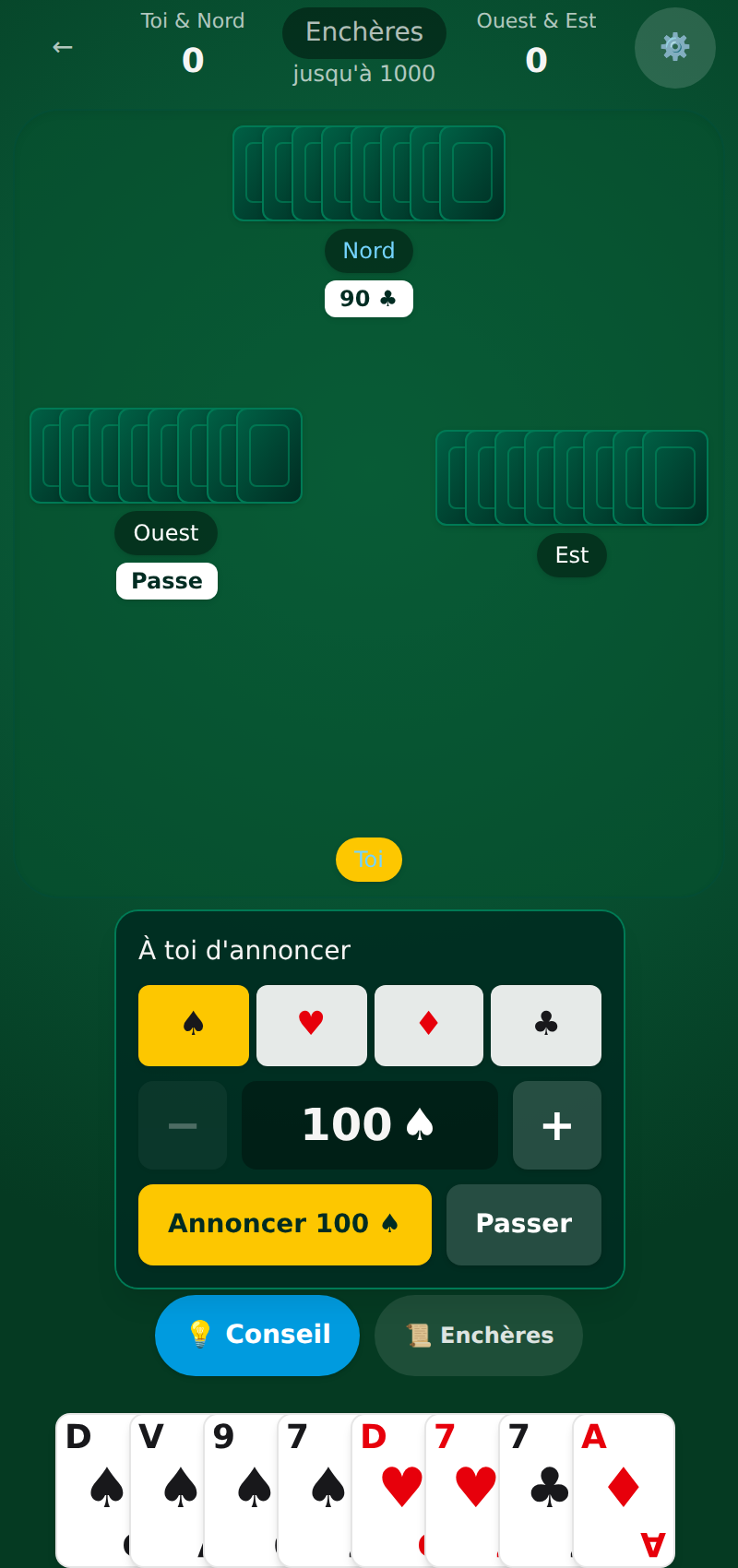
In classic belote you turn a card and simply decide to « take » or « pass ». In contract belote you bid: each player can announce a numeric contract, from 80 to 160 then capot. You commit to a precise point target. It is all explained in the bidding guide.
Difference 2: the trump is named
No turned card forcing the trump: in contract belote the taker freely chooses the trump suit (or no-trump / all-trump) while bidding. That opens real thinking about the best suit for your hand.
Difference 3: you can counter
This is the game's signature. If you think the opponents will fail, you coincher: the contract's value is doubled (x2). They can surcoincher to quadruple (x4). Classic belote has no such bet. The rest of the scale is shared: 162 points per deal, belote 20, and a 90-point bonus for the side that takes every trick (252 instead of 162). Only contrée also lets you bid the capot, a 250 contract.
 Want to practise? Play coinche online for free: tunable AIs and a coach are waiting for you on Coincheur.
See also
FAQ
What is the main difference between contract belote and classic belote?
The bidding: in contract belote you announce a numeric contract (from 80 to capot) and the trump, whereas in classic belote you turn a card and take or pass.
Who chooses the trump in contract belote?
The taker chooses it freely while bidding, unlike classic belote where the trump is forced by the turned card.
Is contract belote the same as coinche?
Yes, they are two names for the same game. « Contrée » refers to the option to counter (coincher) the opponents' contract.