Reading and deducing from opponents' bids
Updated
Every opposing bid is an information leak. Learning to read it helps you decide better whether to coinche, raise or defend.
What an opening tells you
When an opponent opens in a suit, they signal strength: often trumps and at least one honour there. The higher their bid, the more solid their hand should be. This tells you where they expect to win tricks, so where your team will struggle.
Support, raises and passes
- A raise by their partner confirms the opposing pair has cards in that suit.
- A sharp jump betrays a strong hand and ambition.
- A pass suggests a weak hand, or no usable suit.
Deduce without over-reading
These signals are clues, not certainties. An opponent may bluff or hold an unusual hand. Cross several bids (who spoke, who supported, who passed) rather than trusting one alone. And remember your own bids inform them too: reading works both ways. Reading the table well means staying nuanced.
A step-by-step reading
West opens 80 in spades, your partner passes, East raises to 100 in spades. You hold the ace of hearts, the ace and 10 of diamonds, and a single small spade. What can you take from this?
- West probably has spade trumps with at least one big honour (jack or 9).
- East raises by 20: at many tables, that shows about two useful cards for their partner, often aces or high trumps.
- Your partner passed: they likely don't have an opening hand, though they may hold an isolated honour.
- You: with one spade, you're short in trumps. It's the opponents who are more likely to ruff your aces than the other way round.
A possible conclusion: spades are mostly on their side, and your two aces don't guarantee enough points to coinche. Passing and aiming for an accurate defence is easy to defend. Had your partner opened before them, the same hand would have given you a very different reading.
Reading table (take with nuance)
| Bid you see | Likely reading | Keep in mind |
|---|---|---|
| Opening at 80 | A playable trump suit, nothing more specific | Could be a minimum or a cautious hand |
| Partner raises by 20 | Real help: aces or high trumps | Agreements vary from player to player |
| Change of suit | Length in the new suit, little support for the old one | The opposing pair hasn't found its fit yet |
| High opening straight away | A very solid hand | Sometimes an attempt to shut you out of the auction |
| Pass after their partner's opening | Little or no help | A high contract becomes more fragile |
During play, keep crossing these clues with the cards that fall: see rebuilding the opponents' hands mid-deal.
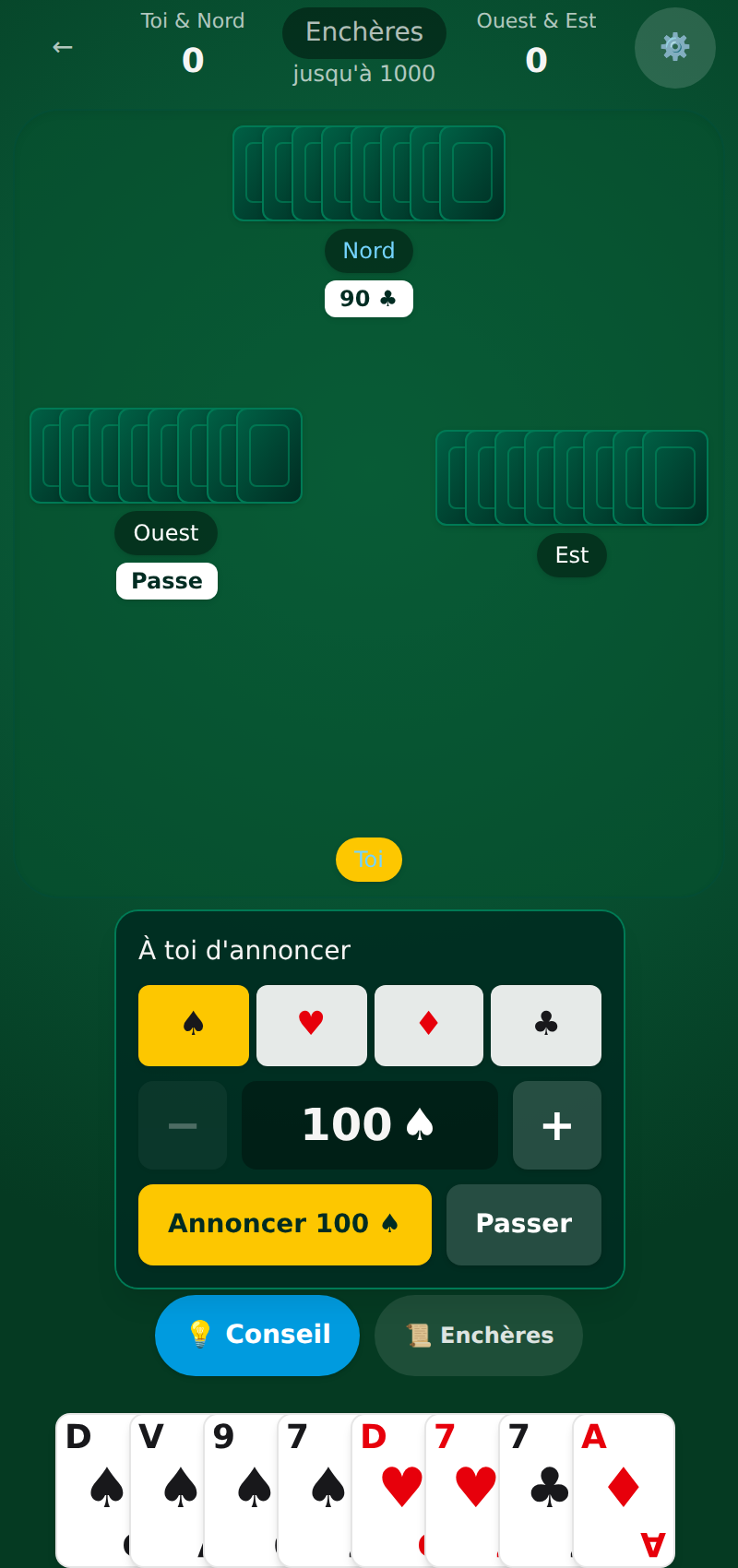 Want to practise? Play coinche online for free: tunable AIs and a coach are waiting for you on Coincheur.
See also
FAQ
What does an opponent's opening tell me?
That they have strength in the bid suit, often trumps and an honour. The higher the bid, the more solid their hand should be. It tells you where they plan to win tricks.
Can you fully trust opponents' bids?
No. They're valuable clues, but an opponent may bluff or hold an unusual hand. Cross several bids and stay cautious in your deductions.
What does it mean when an opponent bids a different suit from their partner?
Most often, that they have a long suit elsewhere and little help in their partner's suit. It's a sign their fit is weaker than it looks, which can make a coinche on the final contract more attractive.