When is passing the better choice?
Updated
Passing isn't giving up: it's information. Knowing when to refrain is a bidding skill in its own right.
Passing also speaks
When you pass, you tell your partner your hand isn't strong enough to commit in the available suit. That's useful information: they'll know not to count too much on you for this contract. A clear-eyed pass beats a forced bid.
When passing is right
- Your hand is weak everywhere: no master trump, no side ace.
- You have no suit long or solid enough to propose as trump.
- Raising the current bid would commit you beyond your means.
Passing without giving up the defence
Passing in the auction doesn't stop you from playing the deal well, nor from coinching the opponents later if the chance comes. And it all depends on context: ahead on the scoreboard, a cautious pass protects your lead; behind, you can sometimes afford a bolder bid instead of a pass. It's never automatic.
Two real hands, two lines of thought
Hand 1: 8-7 of hearts, queen-jack of spades, king-9 of clubs, 10 and 8 of diamonds. You speak first. No possible master trump, no ace, no long suit. Opening here commits your team to tricks you can't see anywhere. Passing is the natural choice, and it tells your partner clearly not to count on you.
Hand 2: your partner opens 80 in hearts. You hold the ace of spades, the 7 of hearts and nothing else worth mentioning. Two options can be defended:
- Pass: your help is real but thin, and you let your partner play a modest contract.
- Raise to 90: your ace of spades is probably one more trick, and many players show it that way.
The right choice depends on what you've agreed as a pair, the score and what the opponents have shown. What matters is that your partner reads your pass or your bid the same way you meant it.
Common mistakes around passing
- Bidding "so they don't get it cheap": overcalling an opposing 80 with no hand exposes you to a failure costing 162 + your contract value, far more than the opponents would have scored.
- Passing with real help: if your partner opened and you hold a side ace and a high trump, staying silent deprives them of valuable information.
- Forgetting your partner's pass: if they passed before you, your hand must carry more on its own. Bidding high while counting on them becomes risky.
For what comes next, see also what happens when all players pass.
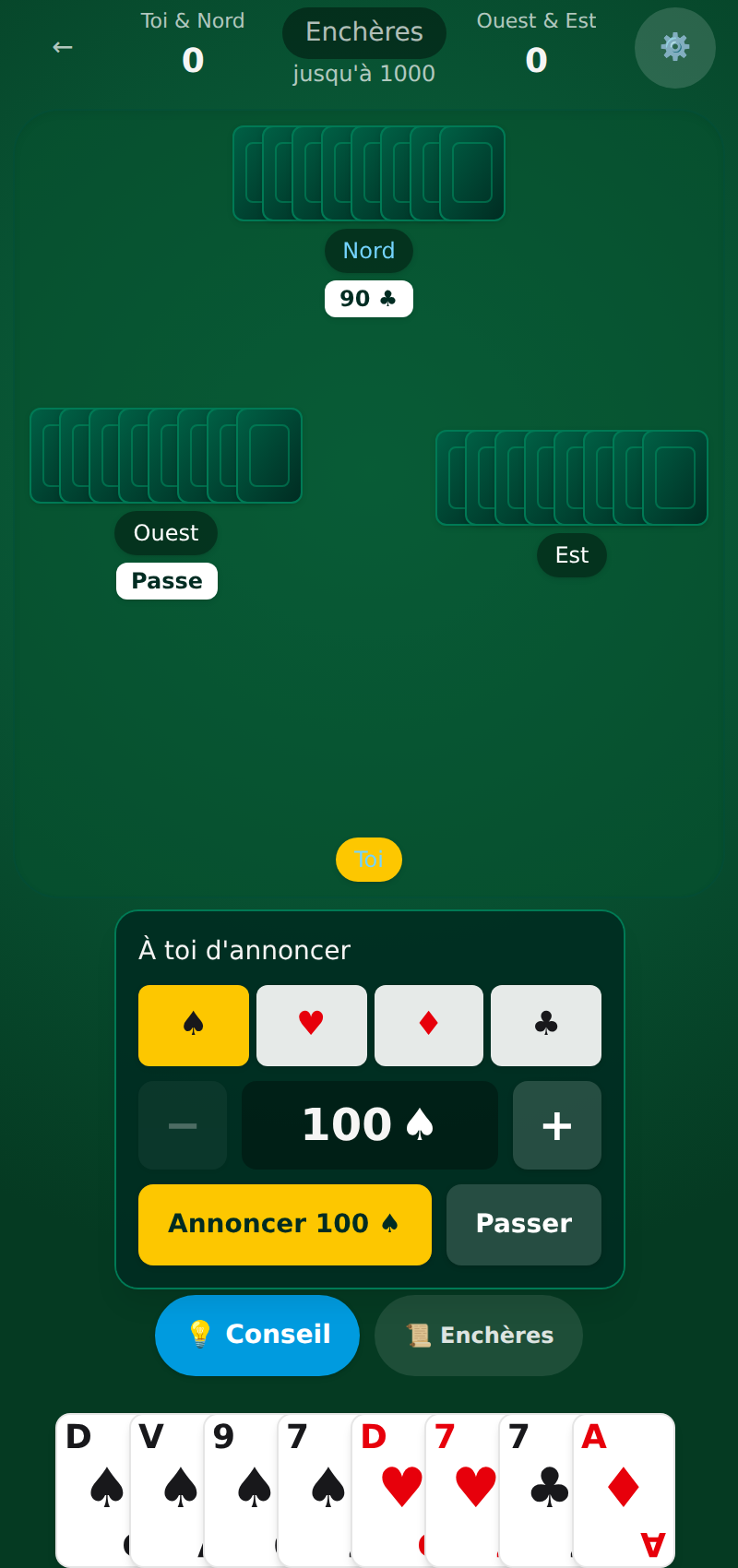 Want to practise? Play coinche online for free: tunable AIs and a coach are waiting for you on Coincheur.
See also
FAQ
Is passing in the auction an admission of weakness?
No. It's a strategic decision that informs your partner and spares you an unmakeable contract. Passing well is part of good bidding.
Can you still coinche after passing?
Yes. Passing on your turn to bid doesn't prevent you from coinching an opponents' contract later, if your hand justifies it.
What happens if all four players pass?
Nobody takes: the cards are gathered and dealt again. No points are scored on that deal.