Bluffing in bidding: useful or risky?
Updated
Bluffing means bidding stronger than your hand to disrupt the opponents or push them into error. A tempting weapon, but one to handle carefully.
Why bluff
A bluff can deny the opponents a contract they'd have made, or push them too high. Slightly overbidding to "steal" an opposing deal is part of some seasoned players' game. Well placed, a bluff changes a match's rhythm.
The double edge
The catch is that your partner believes you. If you bid strong without the cards, they'll support you, climb with you, and you may land in an unmakeable contract, even coinched. In bidding, the information you give your partner is as precious as what you hide from the opponents.
Bluff with judgment
There's no single answer: a bluff can be useful or disastrous depending on the situation. Save it for moments when the score justifies it (far behind, say, where the risk costs less), when you know your partner well, and when the opponents seem unsure. Early in a match, or with a partner you can't yet read, restraint usually pays more.
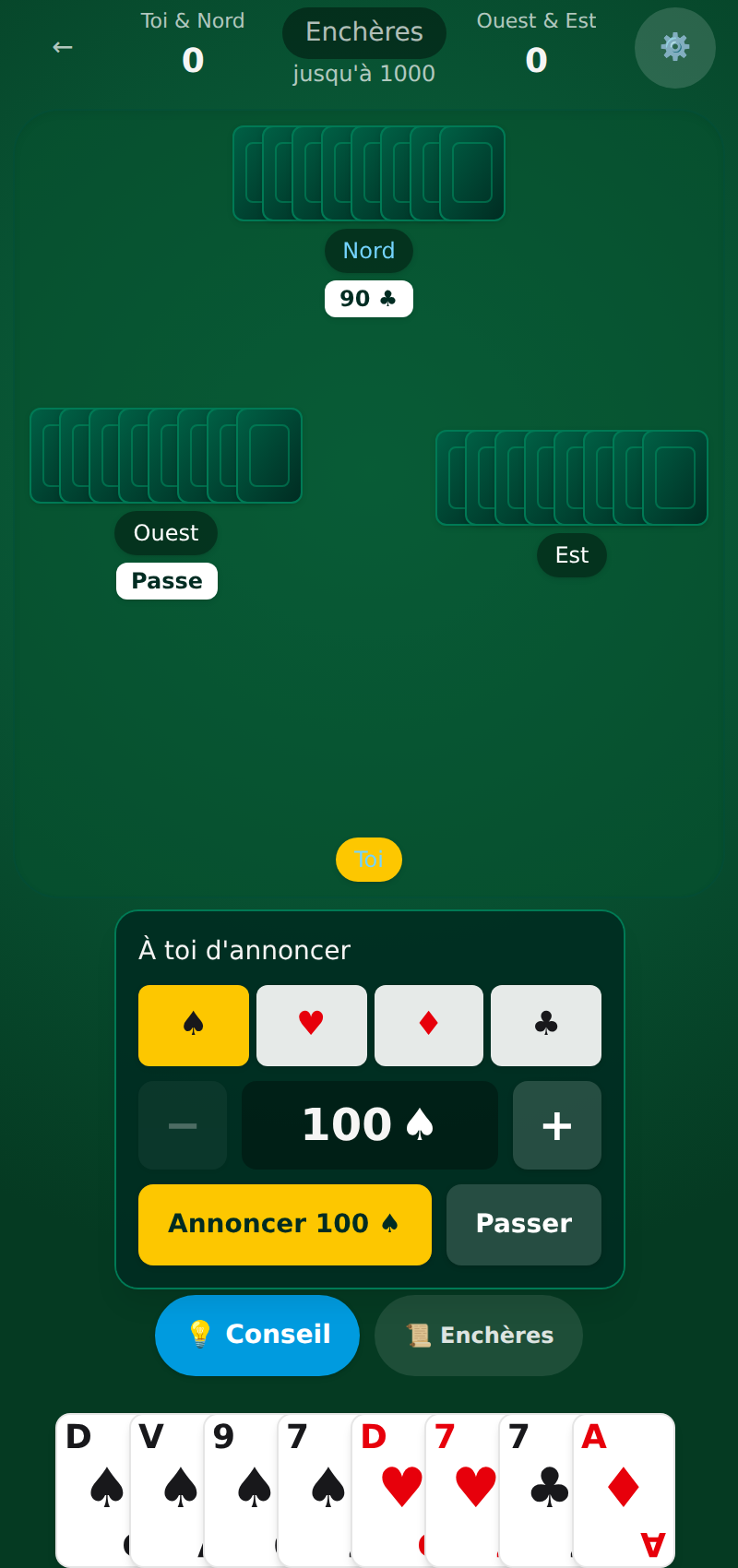 Want to practise? Play coinche online for free: tunable AIs and a coach are waiting for you on Coincheur.
See also
FAQ
Is bluffing forbidden in coinche?
No, bidding above your hand is allowed: it's a tactic. But it's risky, because your partner takes your bids seriously and will adjust their play accordingly.
When is a bluff most likely to pay off?
Rather when the score leaves you room, when you know your partner's reactions and when the opponents hesitate. It's never guaranteed.