Keeping a coinche score sheet
Updated
A clear score sheet prevents end-of-game disputes. Here's a simple template and what to record each deal.
The basic template
Two columns, one per team, and one row per deal:
| Deal | Us | Them |
|---|---|---|
| 1 | 190 | 52 |
| 2 | 0 | 252 |
| Total | 190 | 304 |
Deal 1: we bid 80 and take 110 points, so we score 110 + 80 = 190 and they keep their 52. Deal 2: we go down on a 90 contract, so they score 162 + 90 = 252. Add up as you go: the bottom row shows the running total, so you can see who leads at a glance.
What to record each deal
- The contract bid and by which team (handy in a dispute).
- The points scored by each side, belote included.
- Made or failed: if the taker fails, the defence scores (contract + 162, or your table's scale).
- Any coinche (x2) or surcoinche (x4) multiplier.
How high do you play?
Most games are played to 1000 or 1500 points. Set the target before you start. To avoid hand-adding mistakes, Coincheur keeps the sheet for you: per-deal score, total, and a browsable history. Start a game and let the counter do the work.
One last tip: appoint a single scorer per game and have the table confirm each line out loud. Most end-of-game disputes come not from the play but from a deal entered wrong or a total copied carelessly. A sheet kept cleanly means a game without arguments.
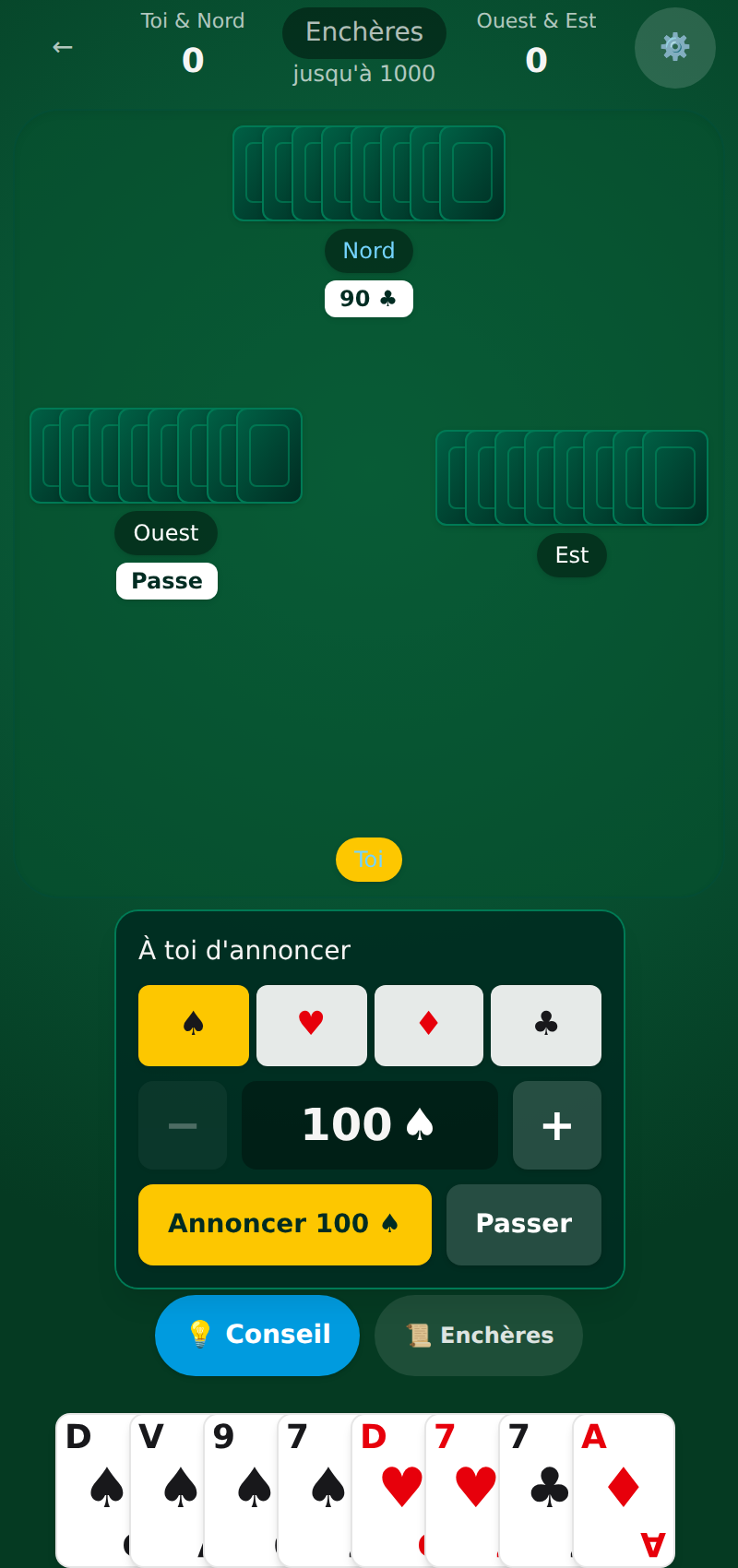 Want to practise? Play coinche online for free: tunable AIs and a coach are waiting for you on Coincheur.
See also
FAQ
What should you record on a coinche score sheet?
The contract bid, which team took it, the points scored by each side (belote included), whether the contract was made or failed, and any coinche or surcoinche.
How many points does a game go to?
Most often 1000 or 1500 points. It's a convention to agree on before you start.