How to choose the trump when you're starting out
Updated
Choosing the trump means deciding which suit will be strongest, and it's one of the first big calls you'll make. Here are clear cues so you don't go wrong early on, even with little experience. Think of them as training wheels you'll soon outgrow.
Look at your potential trumps
For each suit, picture it as trump. The master trump cards are the Jack (20 pts) and the 9 (14 pts), well ahead of the Ace (11) and 10 (10). A suit with the Jack and/or 9, plus a few cards, makes a good trump.
A simple rule of thumb
- 4 trumps or more including the Jack: you can bid with confidence.
- 3 trumps with Jack or 9 + Aces in other suits: it's playable.
- Fewer than that: be cautious, or let your partner speak.
These are just cues: several choices are often fine.
Think of your partner
If your partner has already called a suit, supporting it often pays. Coinche is a team game: two average but complementary hands beat a single big one.
Practise your judgement
The best way to sharpen your eye is to play many deals against the AI on Coincheur and watch what works. You'll quickly learn which hands make their contract and which fall short. Over time, choosing the trump becomes almost automatic: you'll sense at a glance whether a hand is playable. Until then, remember it's often better to pass than to dive into a doubtful contract. And keep in mind there's no single right answer: depending on your style and your partner's, several trump choices can be defended. That's part of the fun of coinche.
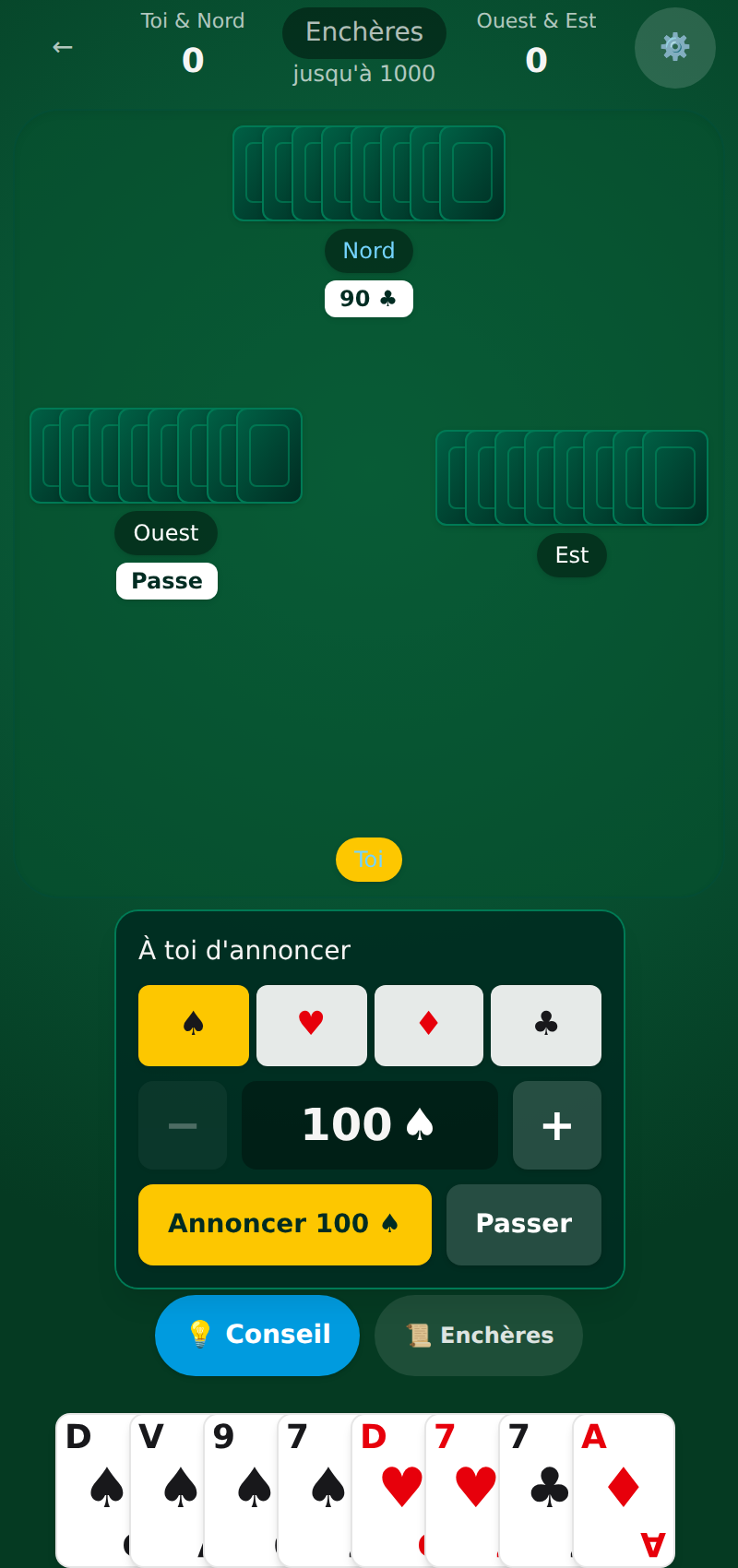 Want to practise? Play coinche online for free: tunable AIs and a coach are waiting for you on Coincheur.
See also
FAQ
What are the best trump cards?
The trump Jack (20 points) and the trump 9 (14 points). They are the two strongest cards, ahead of the Ace and 10.
How many trumps do you need to bid?
Three to four trumps with a master card (Jack or 9) is a good cue, but it depends on your Aces in other suits and on your partner.