A guide to French trick games
Updated
France has a rich tradition of trick-taking games. Here is where coinche fits among its neighbours, to better understand what makes it special.
What is a trick game?
A trick game is played in rounds: each player lays a card, and the strongest wins the "trick." The goal is to win tricks worth points. Belote, coinche, tarot and manille share this principle but vary by deck, player count and the presence of bidding.
For the full definition and more examples, see our page on trick-taking games: definition and examples.
The big games at a glance
| Game | Players | Cards | Bidding |
|---|---|---|---|
| Belote | 4 (2v2) | 32 | simple or none |
| Coinche | 4 (2v2) | 32 | yes, 80 to capot |
| Tarot | 3 to 5 | 78 | by contract level |
| Manille | 4 (2v2) | 32 or 40 | often none |
Coinche sits in an interesting spot: belote's conviviality, plus the depth of bidding and doubling.
How to choose among them
The right game depends on your group and your mood. For exactly four players with a taste for strategy, coinche is ideal. For a relaxed atmosphere and a quick learn, belote or manille work very well. For a group of three to five who enjoy meatier games, tarot shines. The detailed comparisons help you decide: coinche or classic belote, coinche or tarot and coinche or manille. None is superior: they suit different moments and moods, and many players enjoy moving between them depending on who is at the table that day.
Where coinche fits
Coinche is the belote of bidding: 4 players, 32 cards, 8 tricks, 162 points per deal, but with a betting phase (80 up to capot) and the option to coincher (x2) or surcoincher (x4). This blend of accessibility, inherited from belote, and strategic depth, inherited from the spirit of bidding, explains its lasting success both in cafes and online.
For a wider view, beyond trick games alone, read our overview of French card games.
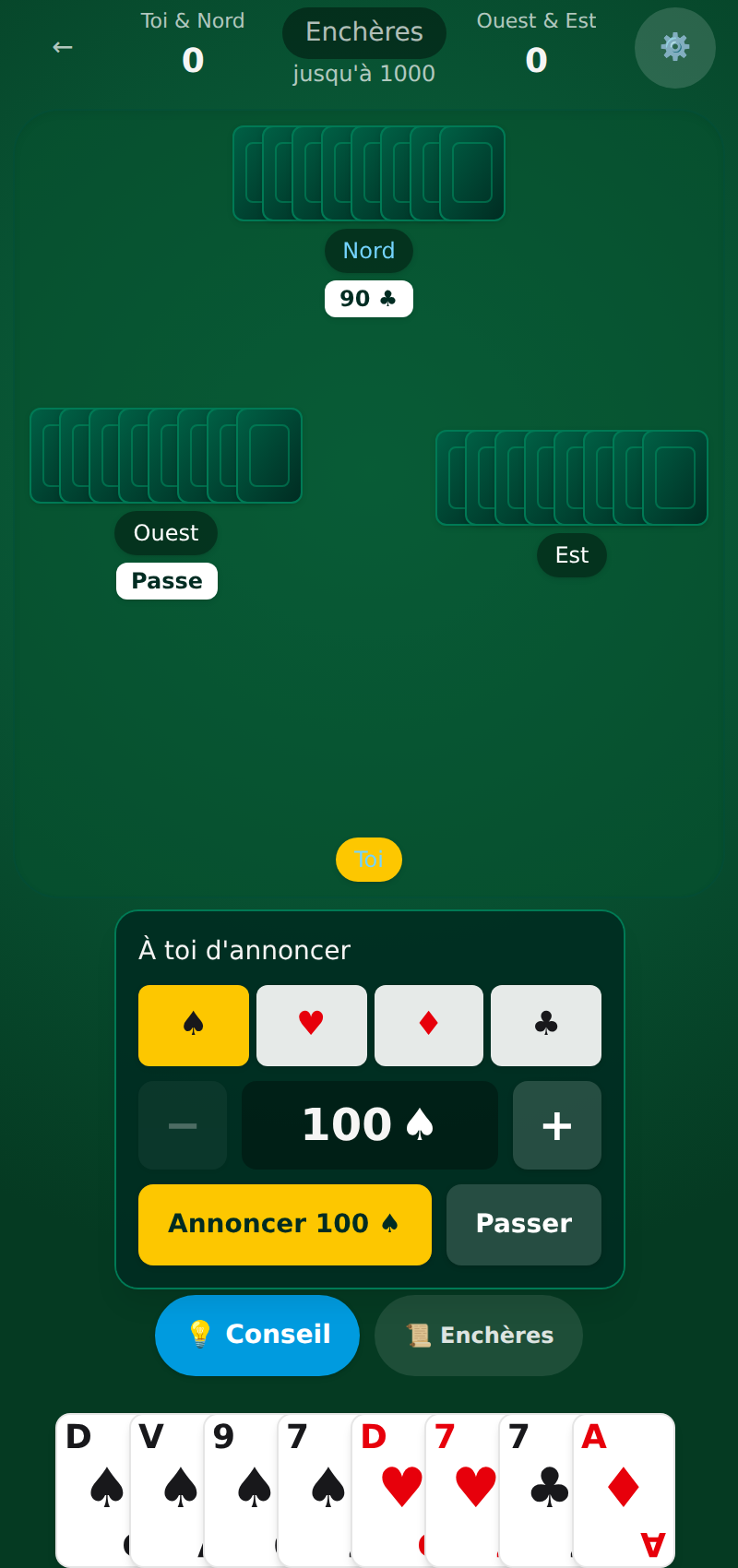 Want to practise? Play coinche online for free: tunable AIs and a coach are waiting for you on Coincheur.
See also
FAQ
What are the main French trick games?
Among the best known: belote, coinche (or contree), tarot and manille. All rely on the principle of winning tricks.
What sets coinche apart from the others?
Its bidding phase from 80 to capot and the option to double, all on the accessible base of 32-card belote.