Coinche with declared melds
Updated
Some tables add to coinche the meld declarations inherited from belote: runs (tierce, fifty, hundred) and four-of-a-kinds. A rich variant, but a non-standard one.
What is it about?
In classic belote you can declare combinations held in hand: runs of consecutive cards in one suit, or four-of-a-kinds (four cards of the same rank). This variant imports these declarations into coinche, on top of the usual bidding.
The common melds
| Meld | Make-up | Common value |
|---|---|---|
| Tierce | 3 cards in sequence | 20 |
| Fifty (quarte) | 4 cards in sequence | 50 |
| Hundred (quinte) | 5 cards in sequence | 100 |
| Four-of-a-kind | 4 cards of the same rank | varies by rank |
These are classic belote values. They are not official in coinche: it's a table convention to confirm before playing.
Why it's tricky
Mixing numbered bidding with meld declarations complicates scoring and can unbalance the game (a big meld can swing a deal regardless of the contract). Many players prefer to keep coinche "pure", without melds, and reserve runs and four-of-a-kinds for belote. If you adopt it, spell out clearly how these points add to the score.
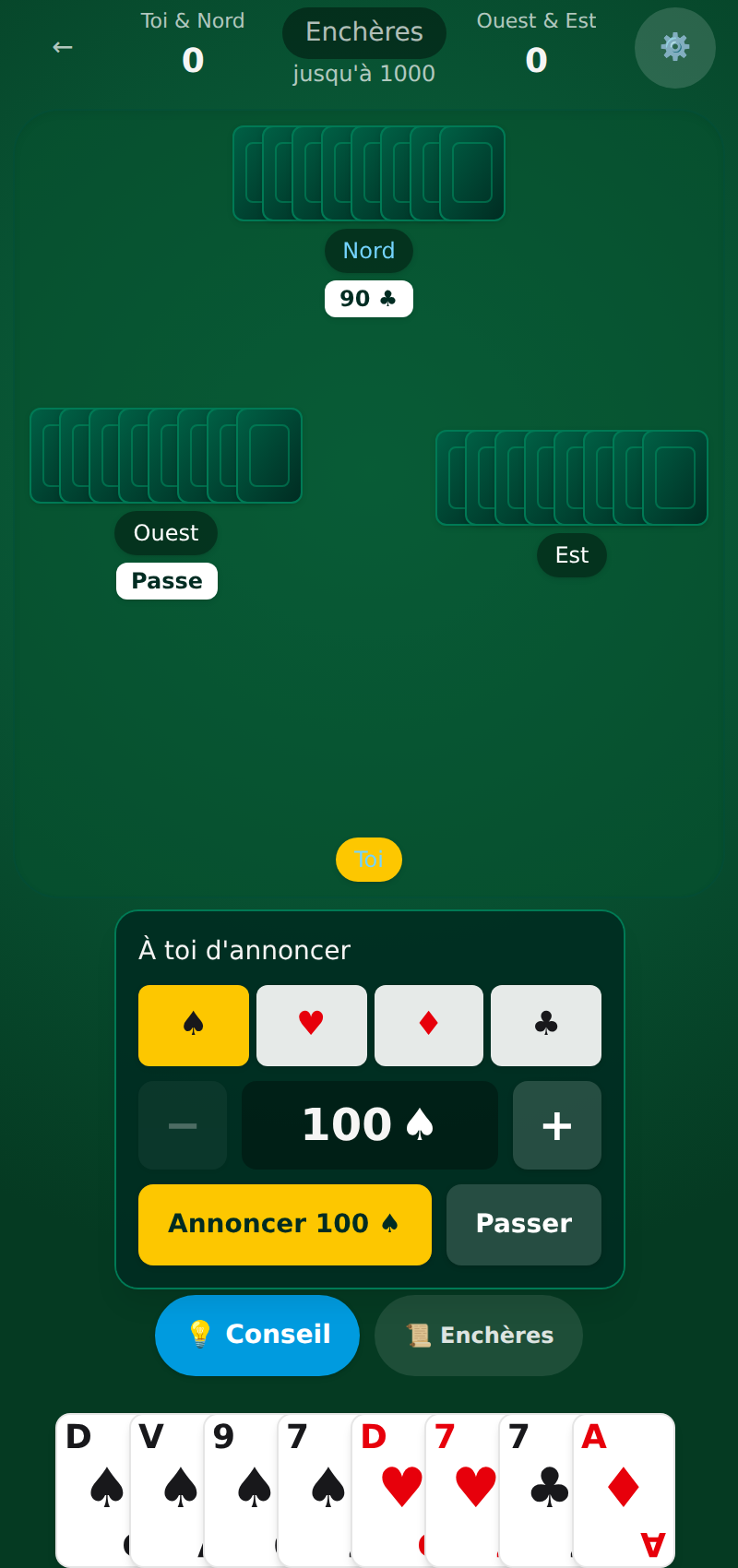 Want to practise? Play coinche online for free: tunable AIs and a coach are waiting for you on Coincheur.
See also
FAQ
Can you declare a run or four-of-a-kind in coinche?
Not in standard coinche. Some tables add the meld declarations inherited from belote, but it's a non-official convention to set before playing.
How much are these melds worth?
With classic belote values, a tierce is 20, a fifty 50, a hundred 100, and four-of-a-kind a value varying by rank. These scales aren't official in coinche, so agree on them.