Coinche short game
Updated
Short on time? Play a short game to 1000 or 1500 points instead of 2000. Same rules, but deals that count double.
How it works
Nothing changes in the flow: bidding, tricks, scoring (162 points per deal, belote 20, bid capot at 250) stay identical. Only the game target drops. The first team to reach the set total (1000, 1500, sometimes 2000) wins the game.
Which target to choose?
| Target | Approx. length | Best for |
|---|---|---|
| 1000 | very short | a break, teaching, a demo |
| 1500 | medium | a balanced evening |
| 2000 | long | a "full" game |
These lengths are indicative: it all depends on the table's pace and how often big contracts come up.
What it changes in strategy
In a short game, each deal weighs more on the final result. A capot or a doubled contract can decide the game on its own. As a result, there's less room to recover from a bad deal, which pushes some players to be more cautious. Conversely, a successful risk brings you to victory quickly. Dose it according to the score.
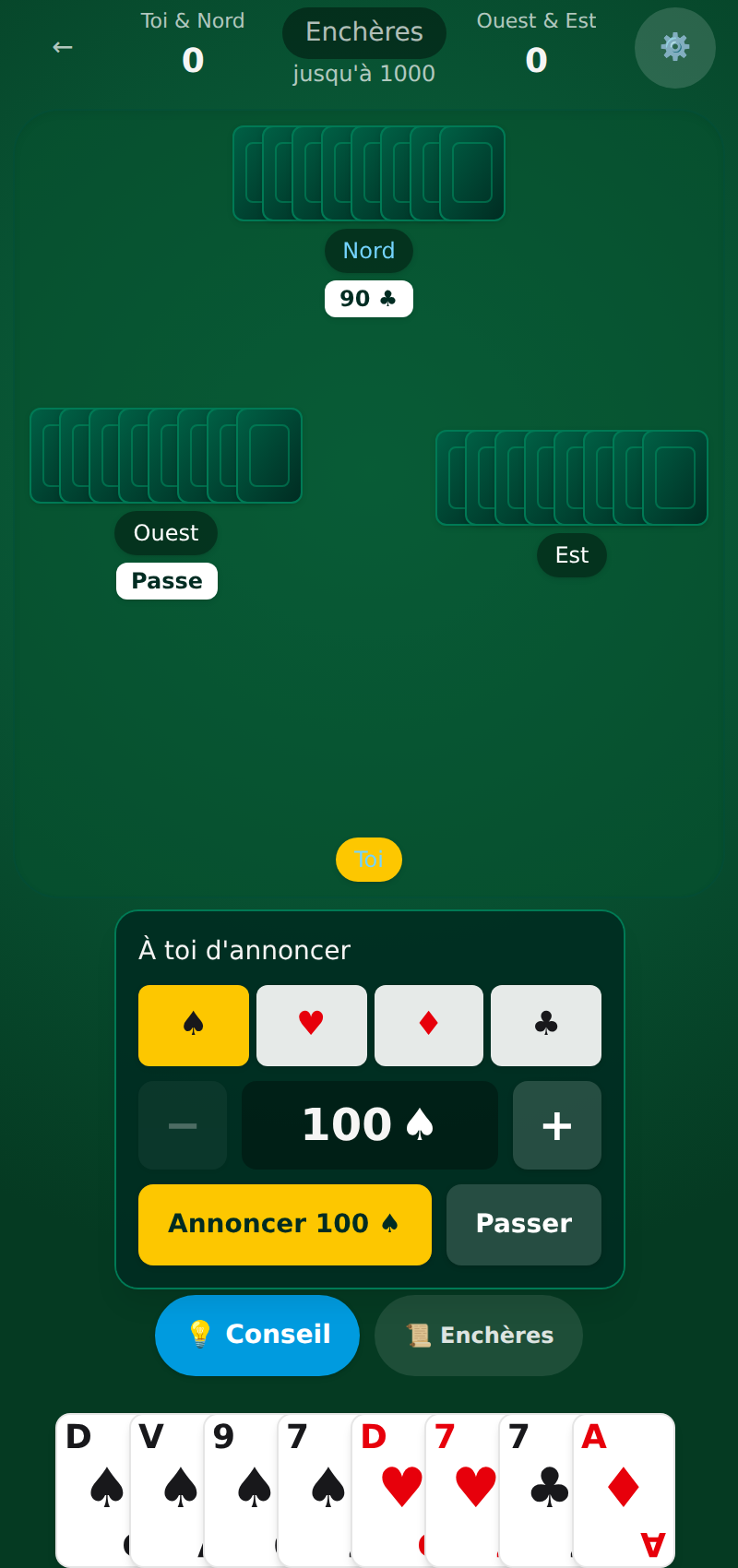 Want to practise? Play coinche online for free: tunable AIs and a coach are waiting for you on Coincheur.
See also
FAQ
How many points is a coinche game played to?
Most often to 1000, 1500 or 2000 points. Choosing 1000 or 1500 shortens the game. The first team to reach the set target wins.
Does a short game change the rules?
No, only the end-of-game rules change: the points target is lower. The scoring, bidding and doubling stay identical. Each deal simply weighs more on the result.