Coinche with ascending bidding
Updated
In ascending-bid coinche, each new bid must be higher than the last. This is in fact the classic way to bid in coinche.
The principle of climbing
Bidding starts at 80 and rises in steps of 10 (80, 90, 100, ... up to capot). Each player in turn can pass or bid a contract strictly higher than the last, choosing their trump (or No-Trump / All-Trump). The last to bid, once the other three have passed, wins the contract.
Why "ascending"?
The term stresses that you can never come back down: a bid commits you and the next must do better. This builds rising tension, especially when two sides fight over the contract. At the top of the climb sit the capot (250) and, at some tables, the générale.
A bit of strategy
Bidding well means judging what your hand and your partner's can achieve, without overbidding into failure. Climbing to "push" the opponents is risky: if they leave you the contract too high, you may pay dearly. Conversely, underbidding leaves points on the table. The balance depends on the score, your seat and your partner's signals. Nothing dogmatic.
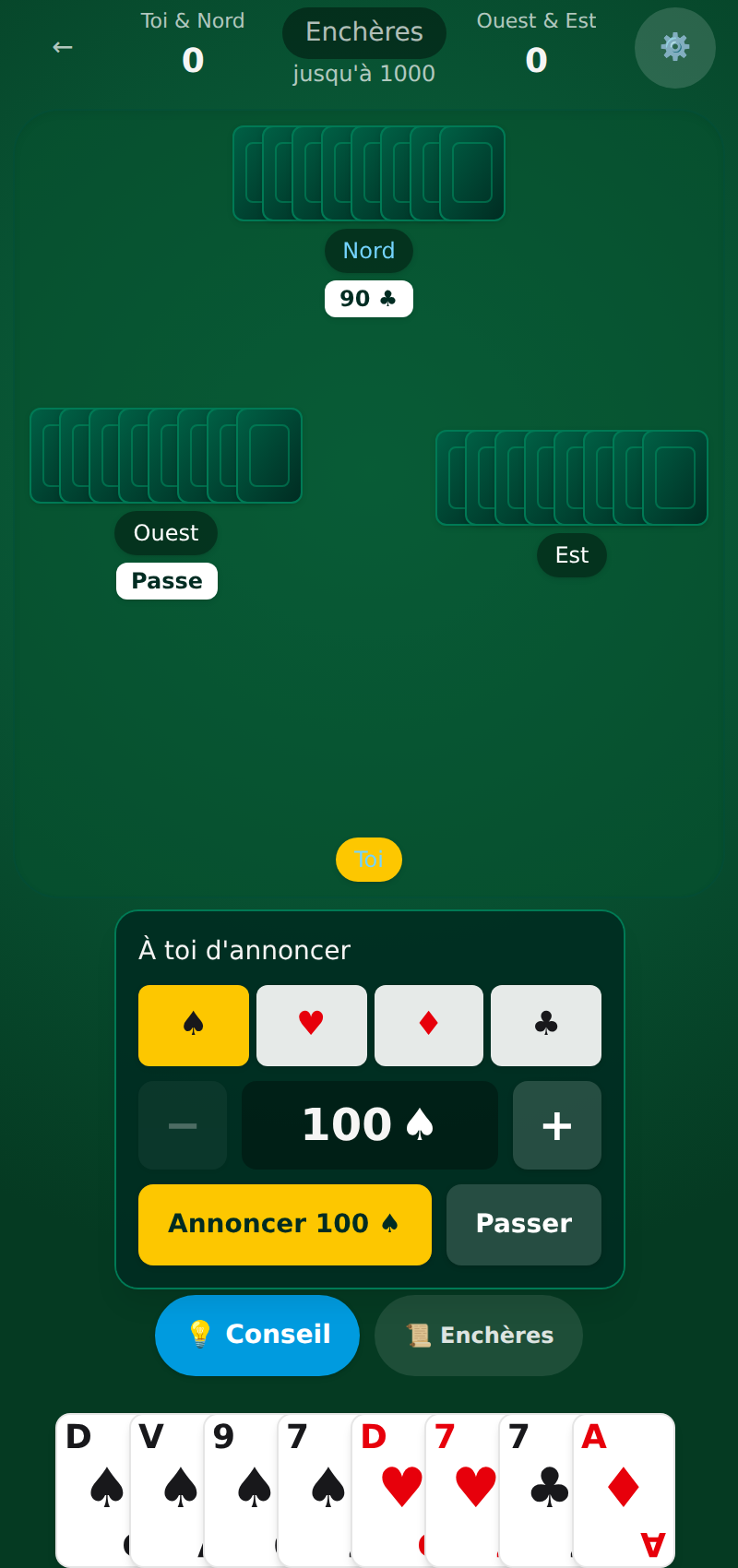 Want to practise? Play coinche online for free: tunable AIs and a coach are waiting for you on Coincheur.
See also
FAQ
How does ascending bidding work in coinche?
It starts at 80 and rises in steps of 10 up to capot. In turn, each player passes or bids a contract strictly higher than the last. The final bidder, once the others pass, takes the contract.
Can you lower your bid?
No, that's the very principle of ascending bidding: each bid must beat the last. You never come back down, which creates the tension of the climb.